

India’s Wind Energy Poised for 8 GW Installations in FY26-27
New transmission push under Green Energy Corridor Phase-III to further accelerate growth
Key highlights:
● 107 GW+ by 2030: 59.2 GW installed, 43 GW under construction, providing 102.2 GW visibility
● Annual installation rate is accelerating: 8 GW in FY26-27 to 13.2 GW IN FY30-31
Wind Installation Roadmap
2026
2027
2028
2029
2030
Annual installation (GW)
8.0
9.0
10.0
12.0
13.2
Cumulative capacity (GW)
62.4
71.4
81.4
93.4
107.0
● Recent Rs.1.86 lakh crore Green Energy Corridor Phase-III policy: Supports India’s 900 GW non-fossil capacity ambition by 2035
Chennai, October 8, 2026: India’s wind energy sector is poised for a new phase of accelerated growth, with annual installations expected to reach 8 GW in FY26-27 and scale progressively to 13.2 GW by FY30-31, taking cumulative installed wind capacity to around 107 GW. With 59.2 GW already installed and another 43 GW under construction, India has visibility of 102.2 GW of wind capacity, providing a strong foundation for the next phase of expansion. The growth trajectory is further supported by the Rs.1.86 lakh crore Green Energy Corridor Phase-III, which will strengthen transmission infrastructure and enable the integration of growing renewable capacity, supporting India’s ambition of 900 GW of installed non-fossil fuel capacity by 2035.
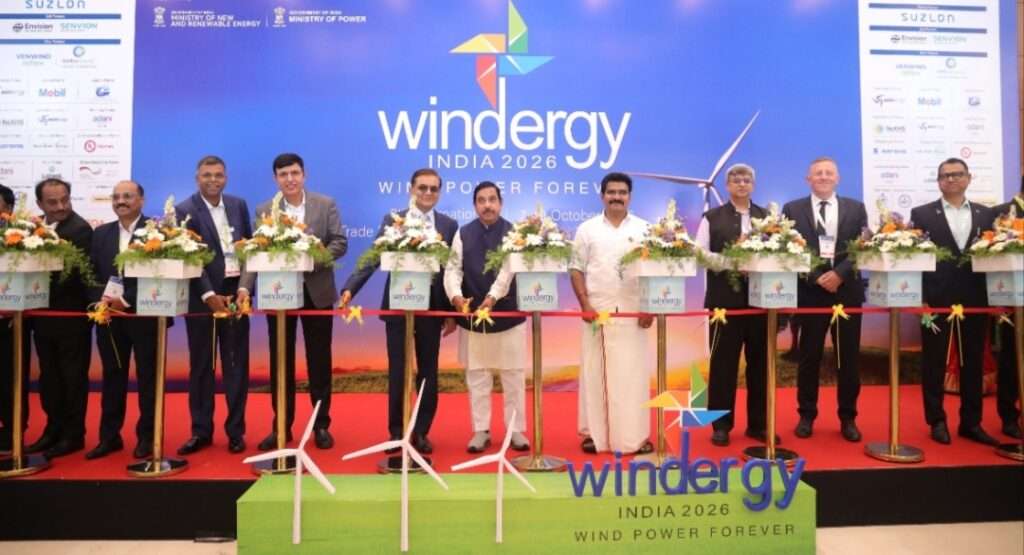
‘Windergy India 2026’ brings together over 400 global exhibitors from more than 20 countries, transforming the venue into a vibrant marketplace of innovation and enterprise. Set against the backdrop of India’s surging renewable capacity, the trade floor highlights a maturing, self-reliant manufacturing ecosystem achieving 80% domestic value addition. Leading OEMs, component makers, and EPC firms are showcasing the latest wind turbine technologies and end-to-end supply chain solutions. Adding to the international scale, dedicated country pavilions from Germany, Denmark, and Spain spotlight specialised global technologies, reinforcing the event as a premier hub for cross-border collaboration and industry growth.
.
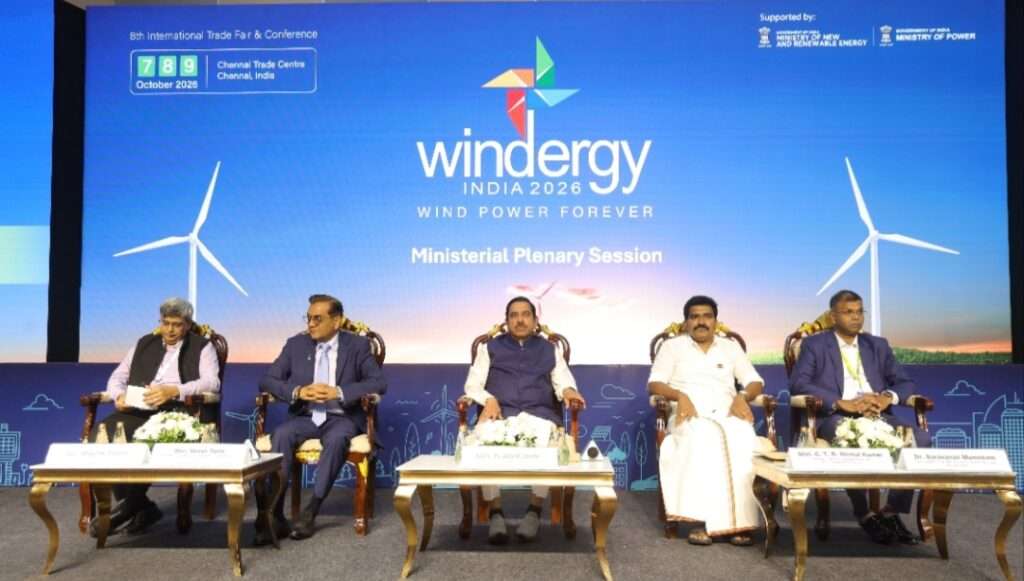
Union Minister for New & Renewable Energy, Consumer Affairs, Food & Public Distribution Shri Pralhad Joshi, said: “India’s wind sector has demonstrated strong momentum, with the highest-ever annual installation of 6.05 GW achieved in FY26. We are confident that annual wind installations will surpass this record in FY27, marking another important milestone in India’s wind energy journey. This continued growth will strengthen the foundation for achieving our national ambition of 100 GW of installed wind capacity by 2030 and further accelerate the development of India’s wind sector. With a strong project pipeline and a supportive policy framework, India is well placed to build on this momentum and achieve the scale required for the next phase of wind energy growth.”
Girish Tanti, Chairman, Indian Wind Turbine Manufacturers Association (IWTMA), said, “India’s wind sector is entering a new phase of sustained growth. With 59.2 GW installed and 43 GW under implementation, India is on track to cross 100 GW of wind capacity by 2030, creating a strong foundation for global leadership in wind manufacturing and exports. India has built over 24 GW of annual wind manufacturing capacity, up from around 12 GW in FY23, supported by a strong component ecosystem. With exports reaching Rs.12,800 crore in FY2025-26, nearly 50% higher YoY, India can significantly expand its global footprint. Our ambition should be to raise India’s share of global wind turbine exports from ~2% today to 10% by 2030, establishing India as a global hub for wind turbines, components, technology and engineering.”
Aditya Pyasi, CEO, Indian Wind Turbine Manufacturers Association(IWTMA), said: “India’s next phase of wind growth must be supported by a resilient and globally competitive domestic manufacturing ecosystem. As the industry transitions towards higher-rated turbines, we need to accelerate indigenisation across critical components while simultaneously building the manufacturing capacity required to meet growing demand. This will require coordinated efforts across OEMs, component manufacturers, technology providers and government, with a focus on strengthening supply chains, developing domestic capabilities and enabling scale. Windergy India 2026 provides an excellent platform to bring the ecosystem together.”