

Over 700 students collaborated on creating a 7,000-metre textile braid, giving a new lease of life to 700 kg of pre-loved clothing.
•The completed braid will be donated to an NGO to make create products like bags and mats.
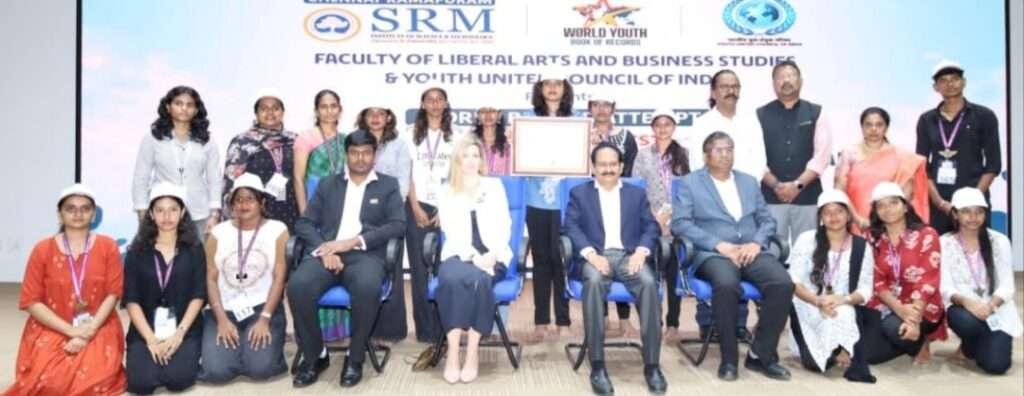
Chennai, October 22, 2026: In a student-led initiative promoting sustainable fashion, textile upcycling and responsible consumption, SRM Institute of Science and Technology, Ramapuram, Chennai, has attempted a world record in creating a 7,000-metre-long braid using pre-loved textiles, involving the participation of over 700 students. The initiative is aimed at upcycling about 700 kgs of discarded clothing obtained from landfills and demonstrating how creative reuse can contribute to a more sustainable future.
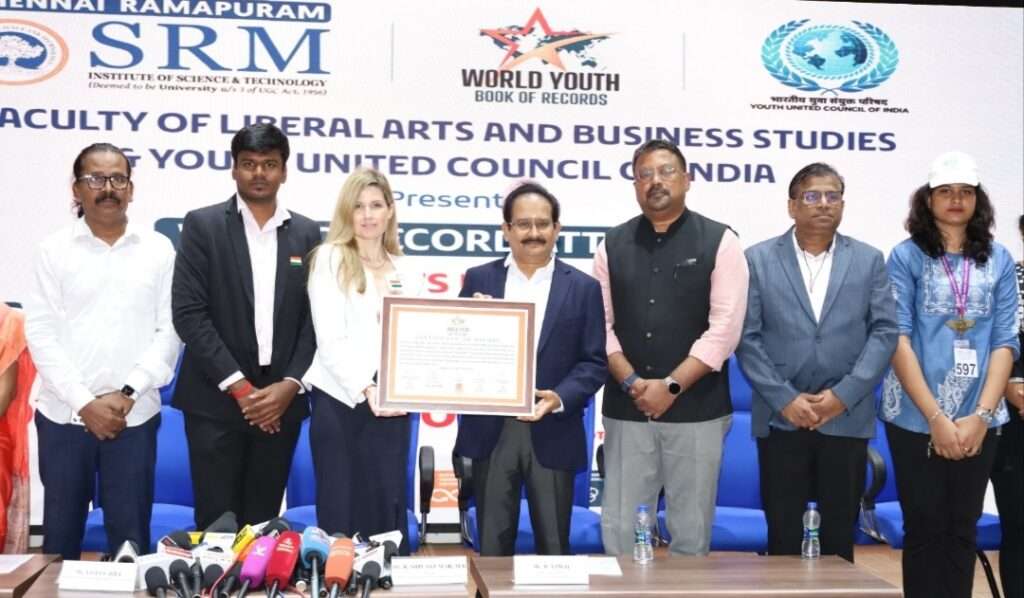
The world record was attempted in the presence of Ms. Lotty Hill, Director, International Partnerships, Youth United Council of India UK President and World Youth Book of Records, Mr. R. Vimal, National General Secretary, Youth United Council of India, Ms. Anisha, a representative from Goonj, Ms. Mridhula, an Advocate, and other distinguished guests from organisations committed to youth engagement, international partnerships, social responsibility and sustainable development.
Students from the Department of Fashion Designing, Faculty of Liberal Arts and Business Studies, worked collectively to prepare and connect the textile braid, showcasing the power of teamwork, creativity and resourcefulness in addressing the growing challenge of textile waste.
The completed braid will be donated to Goonj, a national Non-Governmental Organisation (NGO) that works on community development and the reuse of materials. The textile will be used to create products such as bags and mats, highlighting the potential of upcycling to add value to discarded clothing while supporting community-oriented initiatives.
The objective of the initiative is to raise awareness about the environmental impact of textile waste and the importance of extending the life cycle of clothing. By encouraging the reuse of pre-loved garments, the programme has promoted circular fashion, resource conservation and responsible consumption.
Through this hands-on activity, students gained practical exposure to sustainable textile practices while understanding how individual and collective action can contribute to environmental protection. The initiative also highlighted the role of emerging designers in developing innovative approaches to reducing waste and promoting more responsible fashion choices.
The initiative aligned with the United Nations Sustainable Development Goals (SDGs), particularly SDG 11 (Sustainable Cities and Communities), SDG 12 (Responsible Consumption and Production), SDG 13 (Climate Action), and SDG 17 (Partnerships for the Goals).
By bringing together students, sustainability advocates and community-focused organisations, the programme demonstrated how collaboration, textile craftsmanship and innovative thinking can help address environmental challenges.
The event reflected the University’s commitment to nurturing environmentally conscious designers and encouraging sustainable practices within the fashion and textile industry. It is expected to serve as a platform for promoting awareness, teamwork and innovation among young people while inspiring the wider community to adopt more conscious approaches to clothing consumption and textile reuse.
In his comments, Dr. R. Shivakumar, Chairman, SRM Group of Institutions, Chennai Ramapuram & Trichy, said,* “At SRM, we strongly believe that education goes beyond the classroom. We have been pulling all strings to empower students to create meaningful change in society. This world record attempt reflects our commitment to sustainability, innovation and responsible consumption. By transforming discarded textiles into reusable materials, our students have demonstrated how creativity and teamwork can make significant contribution to a greener and sustainable future. We are proud of their efforts and hope this initiative inspires young minds to embrace sustainable practices and become responsible contributors to society.